The pattern: do more with less
Different systems. Same blind spot.
The founders kept seeing the same problem from different sides of the system. GWI is what that shared pattern became.
- 01
Economic immigration
Judee: economic immigration and workforce access.
Ammar: skilled migrant navigating those systems firsthand.
Same question: how do you recognize capability before the system does?
- 02
Corporate redesign
Judee: workforce mobility and organisational redesign.
Ammar: technology redesign for enterprise organisations.
Same problem: capability changes faster than companies can measure its economic impact.
- 03
Global workforce
They met at the UN from opposite sides of the same issue, presenting on the same panel: Judee representing the private sector on complementary pathways for skilled refugees, Ammar as a skilled refugee and technology leader who went on to build and run a successful technology organisation.
- 04
Enterprise transformation
Judee: workforce and advisory work with global companies.
Ammar: technology transformation and product delivery for corporate clients.
Same blind spot: companies could measure what transformation cost, but not what capability and revenue depended on before they changed it.
The problem
Every company has some version of the same sentence: our people are our greatest asset. Then the spreadsheet arrives. People become headcount, cost, utilization. Technology becomes investment. Revenue belongs to whoever can most directly be tied to generating it. The work that connects all of those things, the people protecting revenue, accelerating it or making it possible for someone else to generate it, becomes much harder to see. AI is making that gap more consequential, because investment in it is increasingly followed by restructuring, and removing people has not reliably predicted whether the technology created value.
Why it has not been solved
The measurement is asymmetric. Companies have sophisticated systems for tracking financial capital, while workforce contribution is still recorded primarily through cost. Financial statements can tell us what labour costs and what technology costs, but they were not designed to show what a specific body of work economically enables. So the easiest contribution to measure, and therefore the one most likely to drive the decision, is often the transaction itself rather than the capability being changed.
What we are building
GWI builds financial intelligence for workforce capital. LEON is the platform: a dependency model of the enterprise, adapted from Leontief’s input-output framework, that shows what economic activity depends on each body of work existing and what a decision does to it. ACUA is the research line beside it, measuring not whether an organisation has AI but how much of the capability it pays for is actually used. The two meet in one chain: capability, utilization, workforce capacity, enterprise impact, return.
The founders
Two founders who kept seeing the same blind spot from opposite sides.
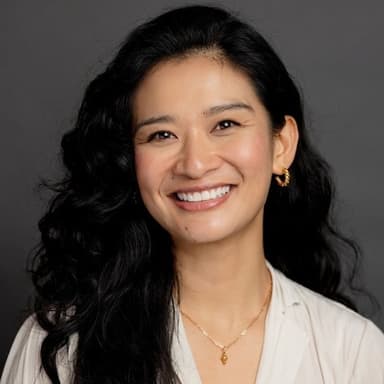
Judee Duran
Founder & Chief Executive Officer
Toronto, Canada
Judee founded GWI Group after more than 15 years working across economic immigration, workforce strategy and corporate transformation. She runs GWI Group as an AI-native company, working across multiple frontier models in the development of its research, methodology and products.
Judee immigrated to Canada as a child through the economic immigration system. That experience later shaped her undergraduate research at the University of Toronto into the history of Canada’s 1967 points system and the gap between selecting skilled immigrants for their qualifications and recognizing those qualifications through professional accreditation once they arrived.
At lululemon athletica, Judee directed the workforce project supporting the company’s recognition as a Significant Investment Project under the Canada–British Columbia Immigration Agreement. The program linked access to highly skilled global talent with investment, job creation, knowledge transfer and broader economic impact, and ultimately received a special exemption from the traditional LMIA process.
Judee designed LEON’s methodology by adapting Leontief’s input-output framework from national economic analysis to the enterprise, mapping how skills, capabilities and bodies of work depend on one another and ultimately contribute to revenue.
Judee holds an Honours BA from the University of Toronto, a Certificate in Immigration Law from the University of British Columbia and a Workforce Planning certificate from Queen’s University.
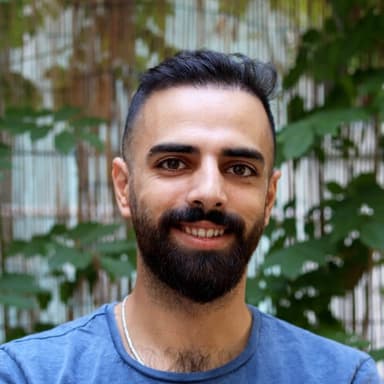
Ammar Sammour
Technical Co-Founder & Chief Technology Officer
London, United Kingdom
Ammar builds LEON: the intake pipeline, the dependency model and the assessment engine that turn the methodology into something an organisation can run on its own files. A senior engineer and technical lead with more than seven years architecting enterprise platforms in regulated industries, he builds multi-tenant data systems with the reliability, security and governance that a report to a board has to carry.
He built the United Kingdom’s first centralised platform for displaced-talent integration, reviewed by the UK Home Office, and advises the Home Office on refugee labour-mobility pathways. He is a founding member of the Refugee Advisory Committee of the Global Task Force on Labour Mobility and has spoken on workforce and labour mobility at the Geneva CRCP (2025), London Tech Week (2024), the UN Global Refugee Forum (2023) and Web Summit (2023).
An immigrant to the United Kingdom, he has seen from the inside how far demonstrable skill can sit from the right to apply it, and how badly the output of people is priced when what they enable has never been measured.
Judee has spoken across workforce mobility industry forums on talent access, workforce strategy and global mobility. She also served as the private-sector representative and keynote speaker on complementary pathways for skilled refugees, bringing the employer perspective to the global discussion on connecting displaced talent with economic opportunity. It was through this work that she met Ammar, who joined the conversation from the other side of the same system: as a skilled refugee and technology leader.
Their paths had approached the same problem from opposite directions. Judee had spent more than 15 years working with organisations trying to access, deploy and redesign talent. Ammar had experienced those systems personally while building the technology organisations use to change how work gets done.
Read the method behind every assessment.
Methodology